

If you are still using regular stickers, then you are wasting money on a step you don’t need. Think about your current process: you mould the bucket, you stack it, you move it to another line, and then you pay a machine or a person to stick a label on it. That is three extra steps where things can go wrong.
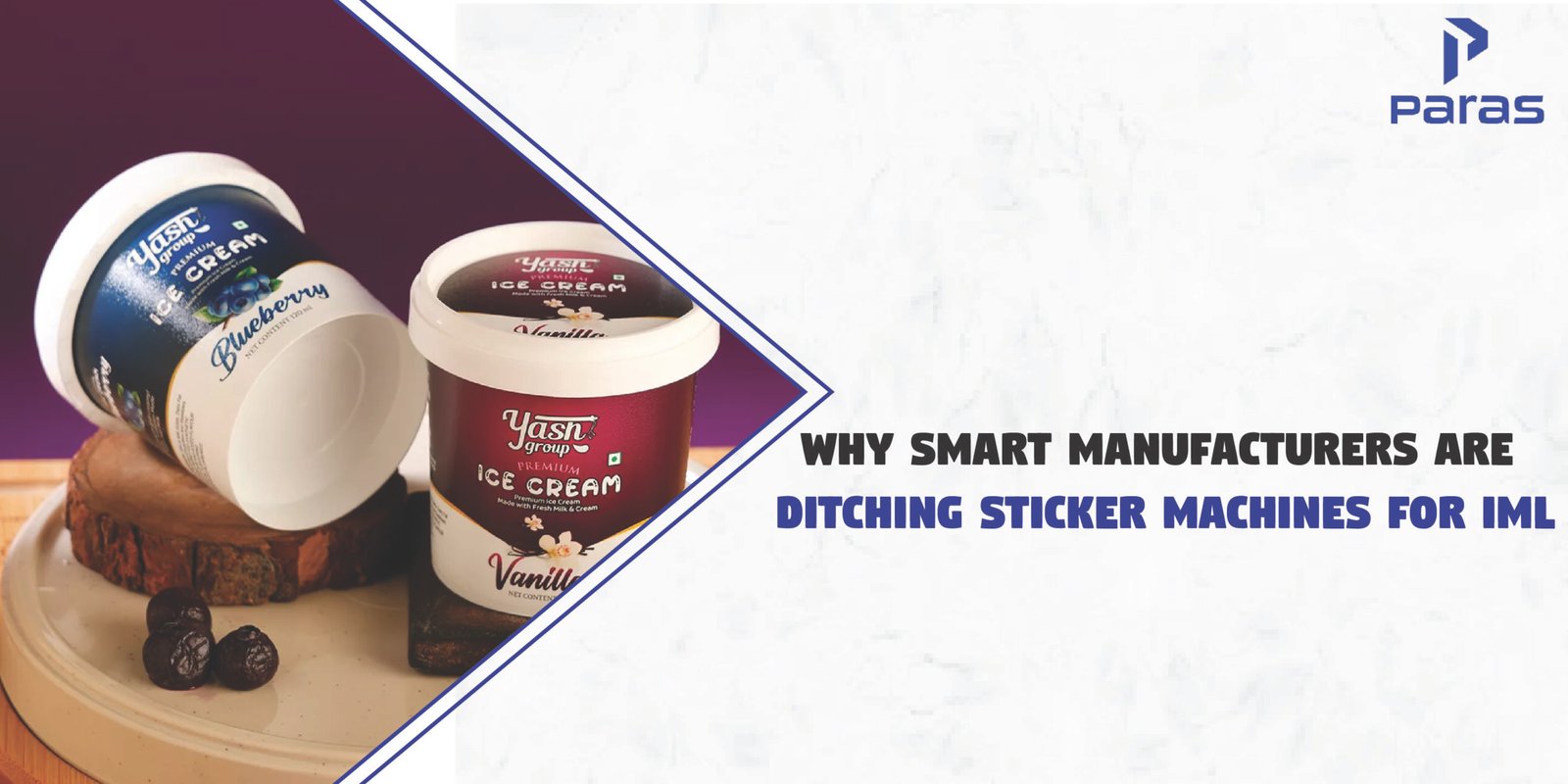
IML (In-Mould Labeling) removes the “labeling department” entirely. We place the label inside the mould before the plastic enters. The product comes out of the machine finished, decorated and ready to pack. It cuts your labor costs and removes the bottleneck where production usually slows down.
The “Mono-Material” Recycling Advantage
Sustainability is usually just used as a buzzword but with IMl, it is a practical reality. Most packaging is a nightmare to recycle because you have a plastic tub, a paper label, and a layer of glue. To recycle it properly, someone has to separate those layers, which almost never happens.
IML containers are 100% Polypropylene (PP). Since the label and the container are made of the exact same material, they are fused into a single object. You can throw the entire bucket into the grinder and recycle it without peeling a single thing. It is the greenest option available in the category of plastic packaging.
Who is Actually Using this in India?
- Paint and Chemicals: Heavy buckets for paint and wall putty face rough handling. Paper stickers tear when these heavy pails rub against each other in a truck. IML withstands the weight and friction.
- Lubricants and Engine Oils: Oil containers are often stored in a greasy garage. Oil spills dissolve the glue on regular stickers, which makes them slide off. IML is immune to oil and grease.
- Dairy and Ice Cream: The cold chain is brutal on adhesives. Moisture and freezing temperatures make stickers peel. IML loves the cold and is standard for brands selling butter, cheese, and ice cream.
- FMCG and Food Containers: Brands that want to prevent counterfeiting use IML. It is easy to print a fake sticker, but it is very expensive for a counterfeiter to replicate an IML mould.
Does it Actually Save Money?
It depends on your volume. If you are making 5,000 pieces, sticking labels by hand is cheaper. But if you are making 500,000 pieces, then IML is significantly cheaper.
You save money because you eliminate the post-moulding labor. You don’t need a labeling machine, you don’t need glue, and you don’t have downtime due to misaligned stickers. The higher your production speed, the more sense IML makes.
Is There Any Customization Headache with IML?
If IML is one thing, then that for sure is that you can do customizations without any headache. Here’s what you can do:
- Quick Changeovers: Changing designs on a sticker machine involves recalibration and downtime. With IML, you simply swap the label stack in the robot. You can switch from “Vanilla” to “Strawberry” in minutes.
- Inventory Reduction: You don’t need to stock huge piles of pre-printed empty buckets in your warehouse. You just stock the labels. You can produce exactly the variant you need, right when you need it.
- High-End Graphics: You can achieve a “No-Label” look where the text seems printed directly on the plastic. Or you can have photographic-quality images that cover the entire lid and sides, which is impossible with standard stickers.
- Design Flexibility: You can use matter, gloss, or even orange-peel textures on the label. This allows your product to feel different in the customer’s hand and not just look different.
Future-Proof Your Products
Efficiency and sustainability are the only way forward for manufacturing in India. IML does both and gives a faster production line and a product that is easier to recycle after use. You don’t have to slow down your line and wait longer for the stickered packing boxes. Choose IML and contact us at iml@paraspack.in to discuss your IML options.
FREQUENTLY ASKED QUESTIONS
Is IML Cheaper for Small Production Runs?
Honestly, no. The setup cost for the mould and the robotic arm is high. IML is a volume game. It becomes cost-effective when you are producing large batches where the speed and labor savings pay for the initial investment. It’s better to partner up than set up your own system.
Can I Get a “Transparent” Look Label?
Yes, we can use a clear IML label that vanishes against the plastic. It gives the appearance that your logo and text have been printed directly onto the container, which looks very premium.
What Happens to the Rejected IML Containers?
They are 100% recyclable. Because the label and tub are the same material, we can grind down any rejected containers immediately and reuse the plastic for the next batch. There is zero waste.
Does the Label Add Weight to the Container?
The weight increase is negligible. The label is an extremely thin film of polypropylene. It creates a strong bond that actually reinforces the sidewalls lightly, but it doesn’t affect your shipping weight.
Is it Suitable for Hot-Filling Products?
Yes, polypropylene IML containers can handle high temperatures whether you are filling hot jams or sterilized food products, the label will not bubble or detach like a glued sticker would.